Phillis Wheatley was one of America’s earliest published poets. Born in West Africa and enslaved as a child, she later became the first African American woman to publish a book of poetry. Her work often explores faith, freedom, education, hope, equality, and human dignity.
If you are looking for Phillis Wheatley quotes, this collection brings together several well-known lines from her poetry. Each quote includes a short explanation and ideas for how you can use it.
These quotes can work well for school projects, speeches, history lessons, classroom discussions, journals, and social media captions.
Phillis Wheatley Quotes (Quick Meaning)
Phillis Wheatley’s poetry often speaks about faith, freedom, courage, hope, leadership, and human worth. Her words also reflect the time in which she lived and the difficult conditions she faced.
Quick Summary
- Learn about important Phillis Wheatley quotes.
- Explore themes of freedom, faith, hope, and courage.
- Find quotes for school projects and speeches.
- Understand the meaning behind selected lines.
- Learn how to share historical quotes with care.
- Avoid common mistakes when using famous quotations.
Best Phillis Wheatley Quotes
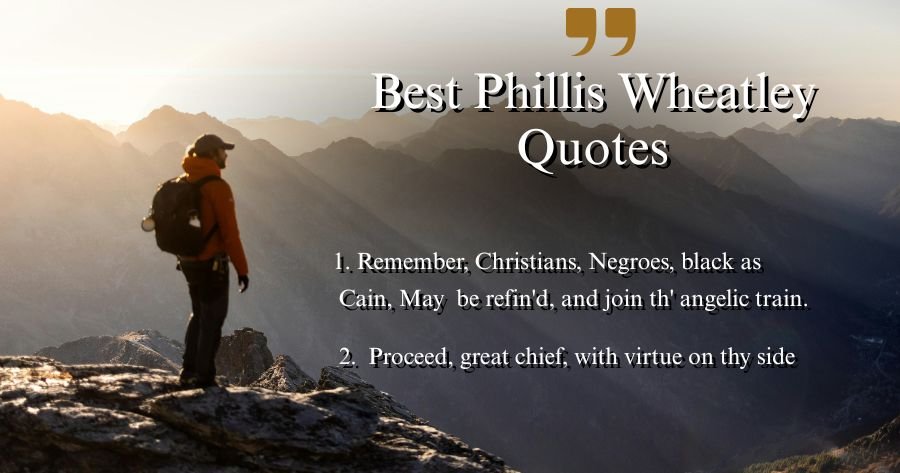
The following lines come from Phillis Wheatley’s poetry. They show several ideas that appear in her work, including faith, freedom, courage, leadership, and equality.
1. “Remember, Christians, Negroes, black as Cain, May be refin’d, and join th’ angelic train.”
— Phillis Wheatley, On Being Brought from Africa to America
This closing line addresses racial prejudice and stresses that Black people share the same spiritual worth as others. The poem was published in Wheatley’s 1773 collection Poems on Various Subjects, Religious and Moral.
Best used for:
- History projects
- Literature classes
- Black history lessons
- Educational presentations
- Discussions about equality
2. “Proceed, great chief, with virtue on thy side.”
— Phillis Wheatley, To His Excellency General Washington
Wheatley wrote this poem for George Washington in 1775. Here, she links leadership with virtue and good character. Washington later thanked her for the poem and praised her poetic talent.
Best used for:
- Leadership speeches
- School presentations
- Graduation messages
- History projects
3. “Fix’d are the eyes of nations on the scales.”
— Phillis Wheatley, To His Excellency General Washington
This line appears in Wheatley’s poem to Washington. It presents the struggle of the time as something watched by nations and connects leadership with events that could shape history.
Best used for:
- History assignments
- Government lessons
- Leadership discussions
- Poetry analysis
4. “Celestial Freedom shall her blessings shed.”
— Phillis Wheatley
This line presents freedom as a blessing. It fits the wider theme of liberty found in Wheatley’s writing.
Best used for:
- Freedom-themed posts
- History projects
- Inspirational writing
- Classroom discussions
5. “Hope animates the brave.”
— Phillis Wheatley
This short line connects hope with courage. It can be used when you want a brief message about staying strong during difficult times.
Best used for:
- Motivational captions
- Journals
- School projects
- Inspirational posts
Short Phillis Wheatley Quotes
Short quotes are easy to remember and can fit well in captions, presentations, and journal entries.
“Hope animates the brave.”
This simple line connects hope with courage.
“Proceed, great chief, with virtue on thy side.”
The line reminds readers that good leadership should include strong character.
“Fix’d are the eyes of nations on the scales.”
Here, Wheatley presents important events as matters that can affect nations and history.
“Celestial Freedom shall her blessings shed.”
The line presents freedom as something that brings hope and blessing.
Why Short Quotes Work Well
Short quotations are easy to read and remember. For example, a brief line can work better than a long passage when you need a caption, presentation heading, or journal thought.
Inspirational Phillis Wheatley Quotes
Phillis Wheatley’s life and writing continue to attract readers because her work combines poetry with ideas about faith, courage, freedom, and human worth.
“Hope animates the brave.”
Hope can give people courage during hard times. This short line is especially useful when you need a simple message about strength.
“Proceed, great chief, with virtue on thy side.”
Wheatley connects leadership with virtue rather than power alone. That idea can fit speeches about responsible leadership.
“Celestial Freedom shall her blessings shed.”
Freedom appears as a source of hope. The line can work well in writing about liberty and human dignity.
“Remember, Christians, Negroes, black as Cain, May be refin’d, and join th’ angelic train.”
This line deserves careful attention to its historical setting. Rather than treating it as a simple modern motivational quote, readers should consider the racial and religious ideas Wheatley was addressing in the poem.
Why These Quotes Inspire Readers
Wheatley’s poetry deals with ideas that still matter today. Hope, courage, faith, freedom, and equality can speak to readers across different generations.
At the same time, her words should be read in their historical setting. Understanding that setting makes the poems easier to understand.
Famous Phillis Wheatley Quotes
Some of Wheatley’s lines are often discussed because of their historical and literary importance.
“Remember, Christians, Negroes, black as Cain, May be refin’d, and join th’ angelic train.”
This is one of her best-known passages. It comes from On Being Brought from Africa to America, a poem that addresses race, Christianity, and spiritual equality.
“Proceed, great chief, with virtue on thy side.”
This line comes from her poem to George Washington. The poem praises Washington while placing strong attention on virtue and leadership.
“Fix’d are the eyes of nations on the scales.”
This line also appears in the Washington poem. It reflects the poem’s focus on war, leadership, and the hopes of nations.
Phillis Wheatley Quotes About Freedom
Freedom is an important subject in Wheatley’s writing. Her poetry was written during a period of slavery and major political change in America.
“Celestial Freedom shall her blessings shed.”
The line presents freedom as a blessing. It can be used when discussing liberty, hope, or human dignity.
Wheatley also wrote about freedom in her poem to the Earl of Dartmouth. In that poem, she directly connects her love of freedom with memories of being taken from Africa.
Freedom and History
Wheatley’s writing should be read with care because her ideas about freedom developed within a society shaped by slavery.
For that reason, her poetry can be useful in history and literature classes. It gives readers a chance to study both her faith and her ideas about liberty.
Phillis Wheatley Quotes About Faith
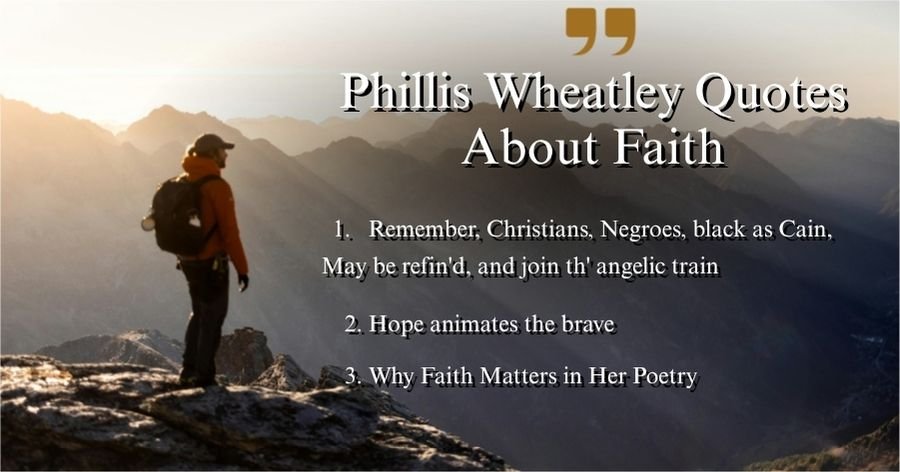
Faith plays a major role in several of Wheatley’s poems. Her Christian beliefs appear throughout her published work.
“Remember, Christians, Negroes, black as Cain, May be refin’d, and join th’ angelic train.”
This line comes from a poem that speaks directly to Christian readers. Wheatley uses religious language while also challenging racial prejudice.
“Hope animates the brave.”
This short line can also be read through the larger themes of hope and faith found in Wheatley’s work.
Why Faith Matters in Her Poetry
Wheatley’s religious writing reflects the culture and beliefs of her time. Her poems often use Christian ideas, biblical references, and images of salvation.
Reading these ideas alongside the historical setting gives readers a fuller view of her work.
How to Choose the Right Phillis Wheatley Quote
The best quote depends on what you want to say.
For Instagram Captions
Choose a short line that fits the message of your post.
For example:
- “Hope animates the brave.”
- “Proceed, great chief, with virtue on thy side.”
- “Celestial Freedom shall her blessings shed.”
For Speeches
Choose a quote that matches your topic. A line about leadership may work well in a speech about character, while a line about freedom may fit a history presentation.
Add a short explanation so your audience understands where the quote comes from.
For School Projects
Use the poem title and author whenever possible. Then explain the historical setting and the main idea of the passage.
For Personal Journals
A short quote can be a starting point for your own thoughts. Write about what the words mean to you and how they connect with the topic you are studying.
How to Use Phillis Wheatley Quotes Effectively
A historical quote becomes more useful when readers know where it came from.
On Social Media
Share a short quotation with the poem title and author’s name. Avoid presenting an old line as if it were written for a modern situation.
In Speeches
Introduce Phillis Wheatley before using her words. Then explain why the quote fits your subject.
In Classroom Presentations
Include the poem title and discuss its main theme. You can also explain the historical period in which Wheatley wrote.
In School Essays
Use a quote as evidence for your point. Afterward, explain how the words support your argument.
In Journals
Write the quote first, then add your own response. This approach can help you think more deeply about the poem.
Why These Quotes Matter
Phillis Wheatley’s poetry has lasting value because it brings together literature, history, religion, and ideas about freedom.
She became a published poet while living in a society shaped by slavery and racial inequality. Her work therefore gives readers an important view of the eighteenth century.
Her poems can also encourage discussions about:
- Freedom
- Equality
- Faith
- Education
- Courage
- Leadership
- Human dignity
- Hope
These subjects help explain why Wheatley’s work continues to be studied.
Common Mistakes When Sharing Phillis Wheatley Quotes
Historical quotations need extra care. A quote can lose its meaning when it is shared without its source or context.
Using Misattributed Quotes
Not every quotation online that carries Wheatley’s name is authentic.
Before publishing a quote, check a reliable literary source or a historical edition of her work.
Quoting Without Context
A short line can mean something different when removed from its poem.
Whenever possible, name the poem and give one or two sentences of context.
Ignoring Historical Setting
Wheatley lived in the eighteenth century. Her language, religious ideas, and references reflect that period.
Understanding the setting helps modern readers read her work more clearly.
Changing the Original Wording
Historical quotations should not be rewritten and then presented as exact words from the author.
If you modernize the meaning, clearly label it as a paraphrase instead.
Helpful Tips for Using Phillis Wheatley Quotes
- Check the source before publishing a quotation.
- Include the poem title when you know it.
- Keep the original wording of direct quotations.
- Explain difficult historical references.
- Use short quotes for captions.
- Use longer discussion and analysis for school projects.
- Give readers enough context to understand the passage.
Internal Linking Suggestions
You can connect this article with other literature and inspirational articles on your website, such as:
- Maya Angelou Quotes About Courage
- Langston Hughes Quotes About Dreams
- Frederick Douglass Quotes About Freedom
- Harriet Tubman Quotes
- Ralph Waldo Emerson Quotes About Life
- Famous Poetry Quotes
- Black History Month Quotes
- Inspirational Quotes About Education
Frequently Asked Questions
Who was Phillis Wheatley?
Phillis Wheatley was an eighteenth-century poet who was born in West Africa and enslaved as a child. Her poetry was published in London in 1773, making her the first African American woman to publish a book of poetry.
Why are Phillis Wheatley quotes still popular?
Her poetry discusses subjects such as faith, freedom, courage, education, and human dignity. These subjects continue to interest readers and students.
What is Phillis Wheatley’s most famous quote?
One of her best-known passages comes from On Being Brought from Africa to America: “Remember, Christians, Negroes, black as Cain, May be refin’d, and join th’ angelic train.”
What themes appear in Phillis Wheatley’s poetry?
Common themes include faith, freedom, education, courage, morality, hope, and human dignity.
Can students use Phillis Wheatley quotes in school projects?
Yes. Her poetry can be useful in literature, history, and Black history projects. Students should include the poem title and explain the historical setting.
Can I use Phillis Wheatley quotes in a speech?
Yes. Her lines can support speeches about history, leadership, freedom, education, and courage. Be sure to explain the source and context.
Are all online Phillis Wheatley quotes authentic?
No. Some quotations online may be incorrectly attributed. Checking a reliable source before publishing is important.
What makes Phillis Wheatley’s poetry important?
Her work is important for both literary and historical reasons. She published poetry during the eighteenth century and wrote about faith, freedom, race, and human worth.
Which Phillis Wheatley quote is good for motivation?
“Hope animates the brave” is a short line that can fit a motivational message. For historical accuracy, however, it is best to verify the wording and source before presenting it as a direct quotation.
Where can I use Phillis Wheatley quotes?
You can use properly sourced quotations in school projects, essays, presentations, speeches, journals, classroom discussions, and social media posts.
Conclusion
The best Phillis Wheatley quotes offer readers a window into poetry, faith, freedom, courage, and history. Her work remains important because she wrote during a difficult period and used poetry to express ideas about religion, leadership, liberty, and human worth.
Whether you need a quote for a school project, speech, journal, or social media caption, always check the source first. Adding the poem title and a little historical context also helps readers understand the words.
Most importantly, read Wheatley’s poetry as both literature and history. Her words become more powerful when we understand the time, beliefs, and struggles behind them.

I am an American writer and quote enthusiast known for his thoughtful approach to life, personal growth, relationships, and everyday inspiration. I am writing combines simple language with meaningful ideas, encouraging readers to reflect on their experiences and find wisdom in ordinary moments.
I have a passion for exploring human emotions, motivation, and the small lessons that shape our lives. Through my work, i hopes to inspire readers to think positively, embrace change, and appreciate the journey of life.
My books include Words That Matter, The Quiet Strength Within, and Lessons from Ordinary Days.